"I think all Christians would agree with me if I said that though Christianity seems at first to be all about morality, all about duties and rules and guilt and virtue, yet it leads you on, out of all that, into something beyond. One has a glimpse of a country where they do not talk of those things, except perhaps as a joke. Every one there is filled full with what we should call goodness as a mirror is filled with light. But they do not call it goodness. They do not call it anything. They are not thinking of it. They are too busy looking at the source from which it comes. But this is near the stage where the road passes over the rim of our world. No one's eyes can see very far beyond that: lots of people's eyes can see further than mine." Mere Christianity
Today we come to the end of Christian Behavior, book three in Mere Christianity. In the Mere Christianity Journal which I have been using as the starting point for this blog an important question is posed: How does one go from a Christianity that seems to be all about "duties and rules and guilt and virtue" to that "something beyond"?
Lewis himself answers this question by telling us we must begin with pretending to be like Christ. The Tao, or the Law, exists to be transcended but it cannot be transcended until I first admit its claims upon me. I must try to act like Christ today whether I feel like it or not.
While I am pretending to be like Christ an amazing thing happens. I suddenly find that Christ has come alongside me and he is helping to turn my pretense into reality. I am catching the infection of his goodness.
This whole process is much more like trying to paint a portrait than it is like trying to follow a rulebook. But how do I paint the portrait of Christ in my life? How do I know what he even looks like? Is he more like Jesus #1, #2 or #3 below?

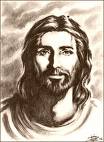
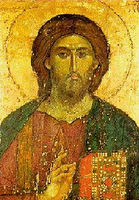
The truth of the matter is, God sat for his portrait 2,000 years ago, and we have at least four reliable paintings of that portrait given to us by Matthew, Mark, Luke and John. The task of the Christian is to so throroughly immerse himself or herself in those portraits that he or she can begin to recognize what Jesus might do in any given situation. Of course our task also goes beyond merely recognizing what Jesus might do if he were in our shoes, we must go on to actually do what he would do. As 1 John 2:6 says, "Whoever claims to live in him must walk as Jesus did."
The only way we can do that, the only way we can not only recognize Jesus' portrait but also paint his portrait afresh, is by the power of the Holy Spirit living in us. And for me, right now, that means finishing the writing of this blog so I can go and serve my children who have just woken up and are clamoring for my attention. . . .
Today we come to the end of Christian Behavior, book three in Mere Christianity. In the Mere Christianity Journal which I have been using as the starting point for this blog an important question is posed: How does one go from a Christianity that seems to be all about "duties and rules and guilt and virtue" to that "something beyond"?
Lewis himself answers this question by telling us we must begin with pretending to be like Christ. The Tao, or the Law, exists to be transcended but it cannot be transcended until I first admit its claims upon me. I must try to act like Christ today whether I feel like it or not.
While I am pretending to be like Christ an amazing thing happens. I suddenly find that Christ has come alongside me and he is helping to turn my pretense into reality. I am catching the infection of his goodness.
This whole process is much more like trying to paint a portrait than it is like trying to follow a rulebook. But how do I paint the portrait of Christ in my life? How do I know what he even looks like? Is he more like Jesus #1, #2 or #3 below?
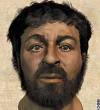


The truth of the matter is, God sat for his portrait 2,000 years ago, and we have at least four reliable paintings of that portrait given to us by Matthew, Mark, Luke and John. The task of the Christian is to so throroughly immerse himself or herself in those portraits that he or she can begin to recognize what Jesus might do in any given situation. Of course our task also goes beyond merely recognizing what Jesus might do if he were in our shoes, we must go on to actually do what he would do. As 1 John 2:6 says, "Whoever claims to live in him must walk as Jesus did."
The only way we can do that, the only way we can not only recognize Jesus' portrait but also paint his portrait afresh, is by the power of the Holy Spirit living in us. And for me, right now, that means finishing the writing of this blog so I can go and serve my children who have just woken up and are clamoring for my attention. . . .
Comments